Historical Development and Regional Production
Archaeological evidence places agave distillation in Mexico as early as the Spanish colonial period of the 1500s, though fermented agave beverages existed long before European contact. The term "mezcal" derives from the Nahuatl words metl (agave) and ixcalli (cooked), literally meaning "cooked agave." While tequila emerged as a standardized category in the 20th century—limited to blue Weber agave from specific regions—mezcal retained its artisanal character across a broader geography and wider botanical range.
Oaxaca remains the dominant producing state, accounting for approximately 85% of certified mezcal production, with notable output from Durango, Guerrero, San Luis Potosí, and Zacatecas. Each region's mezcal reflects local agave species, mineral content in water sources, elevation, and inherited production techniques. The Denominación de Origen Mezcal (DOM), established in 1994, defines geographic boundaries and production standards, though enforcement varies and many traditional producers operate outside the certification system. The category recognizes three classifications based on production method: mezcal (industrial), mezcal artesanal (semi-mechanized with traditional elements), and mezcal ancestral (entirely traditional methods including clay pot distillation).
Agave Species and Maturation
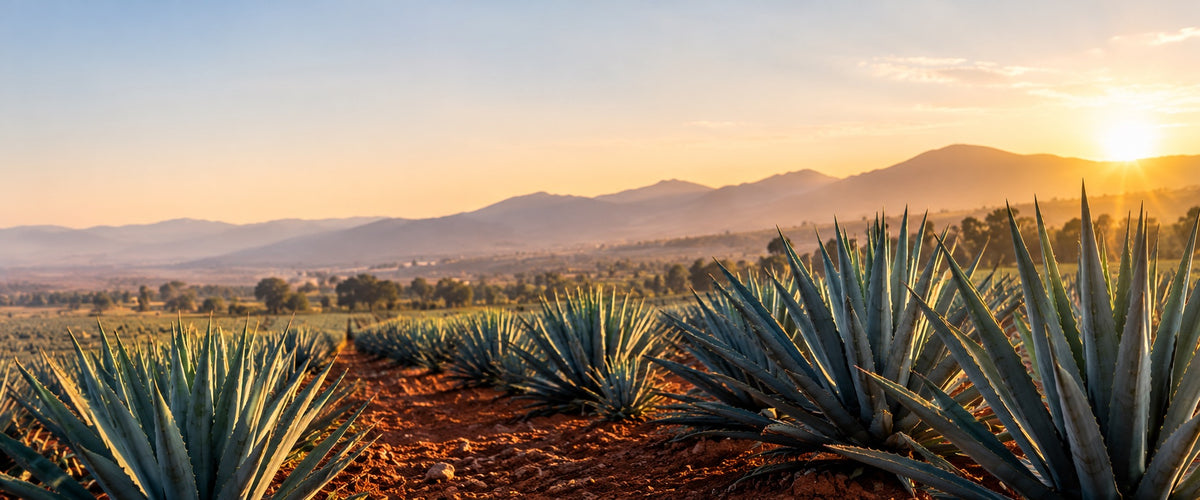
Unlike tequila's exclusive use of Agave tequilana, mezcal production legally permits over forty agave species, though fewer than fifteen see regular commercial use. Agave angustifolia (Espadín) dominates production due to its relatively short eight-year maturation cycle and reliable yields. Wild and semi-wild varieties such as Agave potatorum (Tobalá), Agave karwinskii (Cuishe, Barril, Madrecuishe), and Agave marmorata (Tepeztate) command premium positioning due to scarcity, extended maturation periods exceeding twenty years, and distinct flavor contributions.
Each agave species expresses different sugar concentrations, fiber structures, and aromatic compounds. Tobalá, growing at high elevations, produces smaller piñas with concentrated sweetness and floral notes. Tepeztate, requiring up to thirty years to mature, yields herbaceous, mineral-driven spirits with aggressive vegetal character. The choice of agave fundamentally determines the flavor foundation before production techniques add further complexity. Wild agave harvesting raises sustainability concerns; responsible producers increasingly cultivate semi-wild varieties and participate in replanting programs to prevent resource depletion.
Production Methodology and Flavor Development
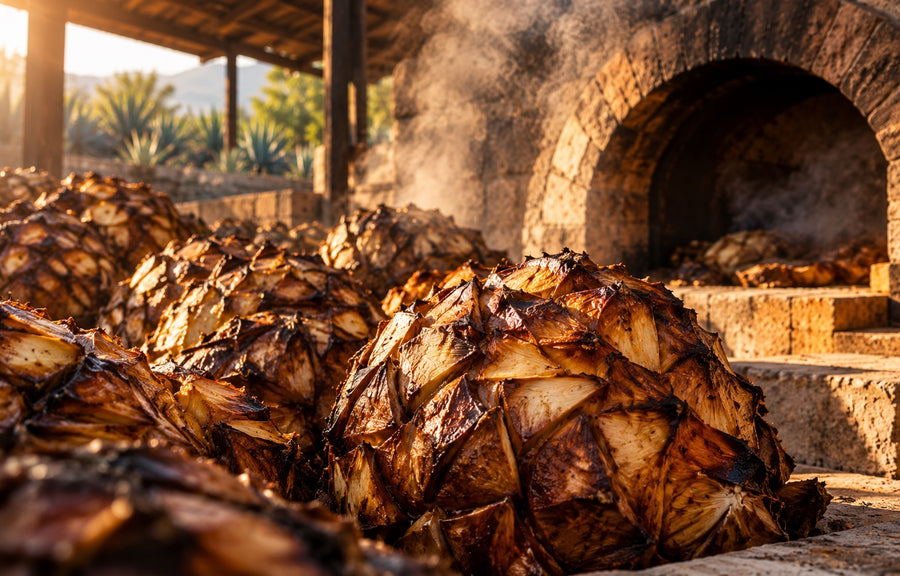
The pit-roasting process differentiates mezcal's flavor profile from other agave spirits. Maestros mezcaleros excavate conical pits, line them with volcanic rock, build fires that burn for hours, then layer agave hearts over the hot stones before covering the pit with earth and agave fiber. The piñas roast for three to five days, absorbing smoke from the smoldering wood and developing caramelized sugars through the Maillard reaction. This extended exposure to smoke and heat creates the foundational roasted, earthy, and sometimes charred notes that define the category.
After roasting, traditional producers crush the agave using a tahona—a large stone wheel drawn by horse or ox in a circular pit. This method gently breaks down fiber without pulverizing it, allowing controlled extraction. Fermentation occurs in wooden vats, animal hide-lined pits, or hollowed tree trunks, relying on ambient yeasts that contribute regional microbial character. Distillation in small copper alambiques or clay pot stills occurs in batches, with distillers making cuts based on sensory evaluation rather than precise temperature or proof measurements. Clay pot distillation, the most traditional method, typically yields lower-proof spirits with pronounced earthy minerality and delicate aromatics that copper stills cannot replicate.
Aging Designations and Expression Styles
Mezcal classification parallels tequila aging terminology but applies less frequently given the category's emphasis on unaged expressions. Joven or blanco mezcal, bottled directly after distillation or with minimal rest, showcases the purest agave and smoke character without wood influence. These expressions range from crystal clear to slightly cloudy due to suspended solids or traditional production methods that eschew filtration. Reposado mezcal rests in wood for two to twelve months, introducing subtle vanilla, spice, and oxidative notes while softening smoke intensity. Añejo mezcal, aged beyond one year, remains relatively rare as extended wood contact can dominate the delicate agave nuances producers seek to preserve.
Some producers create ensambles—blends of multiple agave species distilled together or married post-distillation—to achieve complexity unavailable from single varietals. Others bottle single-village or single-palenque (distillery) expressions to highlight microregional terroir. Pechuga mezcal represents a ceremonial style where a third distillation includes suspended raw poultry, fruit, nuts, and spices in the still, creating a rich, savory-sweet spirit traditionally reserved for special occasions. The category's diversity means no single style defines quality; evaluation depends on production integrity, agave expression, and balance between smoke, fruit, earth, and spirit character.
Evaluation and Selection Criteria
Assessing mezcal requires different criteria than spirits aged in wood or produced through industrial standardization. Look for transparent labeling indicating agave species, production state and municipality, maestro mezcalero name, distillation method (copper or clay), and batch or lot numbers. Artisanal and ancestral classifications on certified bottles signal adherence to traditional methods, though uncertified producers often maintain equivalent or superior quality standards. Proof typically ranges from 45% to 55% ABV, with some traditional expressions bottled at cask strength above 50%.
Aroma should present clear agave character—ranging from green and herbaceous to ripe and fruity depending on species—integrated with smoke rather than overwhelmed by it. Well-made mezcal balances roasted earth, smoke, minerality, and fruit or floral notes without harsh solvent or chemical notes suggesting poor distillation cuts. On the palate, look for complexity beyond one-dimensional smoke, with layered agave sweetness, spice, citrus, or tropical fruit notes evolving through the finish. Texture matters: artisanal production often yields fuller mouthfeel and longer finish than industrial methods. Unlike bourbon or other wood-aged categories, mezcal quality doesn't correlate with age; a well-executed joven expression from rare agave frequently surpasses a poorly aged product from common varieties.